Miniature American Shepherd Mom Design Review
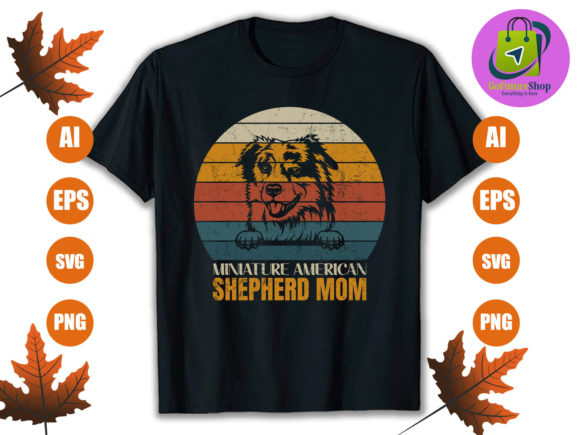
As a professional embroidery digitizer and product reviewer, I approach every new graphic with a specific question: will this actually stitch out well on real fabric? When evaluating the Miniature American Shepherd Mom design, my first impression is one of niche specificity and emotional resonance. This is not a generic dog lover graphic; it targets a passionate community of Miniature American Shepherd owners who value breed recognition. Visually, the layout suggests a balance between illustrative detail and typography that is essential for successful T-Shirt Designs. However, moving from a digital screen to a physical embroidery project requires careful consideration of how those RGB colors and vector lines translate into thread.
Translating Digital Graphics to Stitched Reality
The product description lists AI, EPS, SVG, and PNG files in RGB color. For an Etsy seller or craft business owner, this indicates you are likely starting with a vector or high-resolution raster source rather than a pre-digitized machine file. This is a crucial distinction. While these formats are perfect for printable mockup creation or sublimation, they require professional digitizing to become a functional machine embroidery design. As a reviewer, I appreciate having the source design assets because it allows for customization before digitizing, but it also means you must verify the stitch density and underlay yourself or hire a digitizer who understands breed-specific features.
The visual personality of this design leans towards warmth and pride. The silhouette or illustration of the Miniature American Shepherd likely contains moderate detail—distinct markings, ear shape, and coat texture—that defines the breed. In a digital format, these details are crisp. In embroidery, however, they present a challenge. If the original art uses gradients or fine lines, these must be converted to appropriate fill stitch or satin stitch areas. A common pitfall with breed-specific designs is losing the defining characteristics during simplification. If the dog’s merle pattern or facial expression gets lost in bulky stitching, the "Miniature American Shepherd Mom" identity fails, and it just becomes a generic dog. Therefore, when preparing this for production, prioritize clarity over complexity.
Real-World Application: The Custom Sweatshirt Test
To truly evaluate this design, let’s apply it to a real-life scenario: creating a premium crewneck sweatshirt for a boutique holiday collection. Sweatshirts are a staple for custom apparel, but the fleece backing and stretchy knit fabric demand respect. I recently worked on a similar breed-mom project where the client wanted a detailed portrait on the left chest. The mood was cozy yet polished.
In this context, the Miniature American Shepherd Mom design serves as the focal point of the garment. For a sweatshirt, the design size typically ranges from 3 to 4 inches wide. At this scale, the text "Mom" needs to remain legible without competing with the dog illustration. If the font is too ornate or thin, it will disappear into the fabric texture. I recommend testing a bold, slightly rounded serif or a clean sans-serif that complements the organic shapes of the dog. Furthermore, because sweatshirts have significant loft, using the correct stabilizer is non-negotiable. A medium-weight cutaway stabilizer is usually necessary to prevent puckering and ensure the finished product looks professional after washing. Without proper stabilization, even the most beautiful embroidery file will look amateurish on fleece.
Navigating Fabric Limitations and Hoop Constraints
While this design shines on stable knits, it requires caution elsewhere. As an experienced reviewer, I must highlight where this design might struggle. Small hoop sizes, such as 4x4 inches, can be restrictive if the artwork includes both a detailed dog and multi-line text. Attempting to shrink complex Graphics to fit a tiny hoop often results in dense stitch piles that can perforate delicate fabrics or cause needle breaks. If you intend to use this for baby embroidery on onesies or bibs, significant simplification is required. Baby items demand soft, low-density stitching to avoid irritation. The original detailed version intended for adult tees may be too heavy for infant wear.
Textured fabrics like terry cloth towels or canvas tote bags also present challenges. The nap of a tote bag design or tea towel can swallow fine details. If the Miniature American Shepherd has intricate fur lines, consider using an appliqué technique or a heavier outline to define the shape against the textured background. Conversely, on thin or stretchy performance fabrics, high stitch density can cause tunneling. Always test on scrap fabric that matches your final substrate. Dark fabrics require special attention to thread contrast; RGB colors on screen do not always match polyester or rayon thread availability. Ensure the dog’s markings are distinct against dark navy or black sweatshirts, perhaps by adding a light border or adjusting the thread colors to enhance visibility.
Commercial Viability and Professional Presentation
For the small shop product lineup or commercial embroidery business, consistency builds trust. Customers buying breed-specific merchandise are knowledgeable; they will notice if the dog doesn't look quite right. Using the Miniature American Shepherd Mom design effectively means ensuring the final stitch-out honors the breed standard. This attention to detail directly impacts perceived value and buyer engagement. A well-executed embroidered patch or custom tee signals professionalism, whereas a poorly digitized version suggests mass-produced indifference.
When listing this as a personalized gift or boutique item, your presentation matters. Use the provided PNG and SVG files to create accurate printable mockup previews, but clearly state that the actual product is embroidered. Misleading customers with flat digital prints when selling textured embroidery leads to returns. Additionally, verify your licensing. The inclusion of AI and EPS files suggests flexibility, but you must confirm whether you have the rights to sell the digital embroidery file itself or only the physical handmade product. Respecting intellectual property is as important as stitch quality in maintaining a reputable craft business.
Essential Pre-Production Checklist for Makers
Before you load this design into your machine for a client order or inventory stock, run through this practical checklist derived from real-world testing:
- Verify File Conversion: Confirm that the RGB vector art has been properly digitized for embroidery, not just auto-converted. Check for jump stitches and trim commands.
- Test Stitch Density: Run a sample on your target fabric. Feel the back of the embroidery; if it is stiff or bulletproof, reduce the density to preserve drape and comfort.
- Check Text Legibility: Ensure the smallest text height is at least 6mm for reliable stitching. Anything smaller risks illegibility and thread breaks.
- Validate Color Matching: Compare your thread palette to the original RGB art under natural lighting. Adjust for the sheen difference between matte fabric and shiny thread.
- Assess Stabilizer Pairing: Match stabilizer weight to fabric stretch. Use topping on high-pile fabrics to keep stitches visible.
- Review Licensing Terms: Double-check if the source allows for commercial sale of finished goods versus digital redistribution.
- Mockup Accuracy: Use the provided assets for marketing, but photograph actual stitched samples for the main listing image to manage customer expectations.
The Miniature American Shepherd Mom design holds immense potential for connecting with a dedicated niche audience. Whether applied to a cozy holiday sweatshirt, a practical tote bag, or a cherished keepsake, its success depends entirely on the maker's technical execution. By respecting the transition from digital art to physical thread, and by acknowledging the specific constraints of various fabrics and applications, you can transform these graphics into high-value, emotionally resonant products that stand out in a crowded marketplace. Remember, in embroidery, the best design is one that survives the wash and still tells the story perfectly.