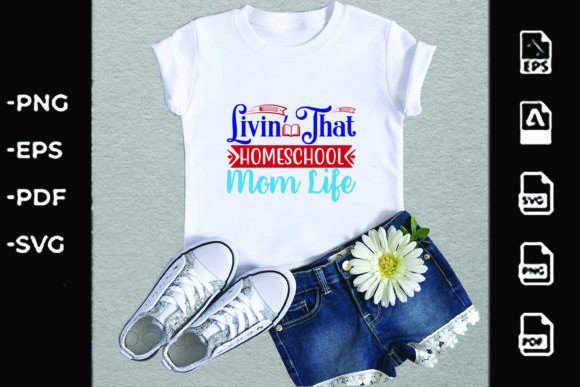
Livin’ That Homes: SVG Design Review
As a designer who spends just as much time behind an embroidery machine as I do in vector software, I approach every new digital asset with a healthy dose of skepticism. When evaluating the Home School Svg Design, livin’ That Homes, my first thought isn't about how pretty it looks on a screen, but how it will behave under a needle. This design captures a specific cultural moment—the proud, chaotic, and rewarding reality of homeschooling—but translating that sentiment into a tangible handmade product requires more than just hitting "start." After reviewing the files and visualizing the stitch-out, here is my practical assessment for fellow makers, Etsy sellers, and apparel decorators considering this graphic for their next collection.
First Impressions and Visual Personality
The phrase "livin’ that homeschool mom life" carries a distinct mood. It is relatable, slightly humorous, and deeply personal. Visually, this Home School Svg Design, livin’ That Homes leans into a casual, lifestyle aesthetic rather than a rigid academic look. For a machine embroidery design, this is crucial. Stiff, blocky lettering often fails to convey the warmth of homeschooling, while overly ornate scripts can become illegible when stitched. This design appears to strike a balance suitable for T-Shirt Designs and casual wear.
From a production standpoint, the layout suggests versatility. The typography likely allows for resizing without catastrophic distortion, which is essential when adapting a single embroidery file for different garments. As Graphics, the clean lines indicate that digitizing this into a satin stitch or fill stitch combination should be straightforward, provided the original vectors are smooth. For those using this for vinyl or sublimation alongside embroidery, the included PNG and SVG formats ensure your mixed-media projects maintain brand consistency across different application methods.
Real-World Application: The Sweatshirt Test
To truly judge this design, I mentally placed it on a Gildan 18000 sweatshirt in heather grey—a staple for the homeschool demographic. In this real-life scenario, the Home School Svg Design, livin’ That Homes serves as a conversation starter for park days and co-op meetups. However, stitching text-heavy designs on fleece-backed sweatshirts presents challenges. The pile of the fabric can swallow thin running stitch details.
If I were producing this custom apparel item for a client, I would prioritize stitch density adjustments. Fleece requires a slightly higher density or a topping to prevent the stitches from sinking. Because this design celebrates the "mom life," the finish needs to look durable and cozy, not fragile. A well-executed version of this design on a sweatshirt adds significant perceived value to a small shop product. Customers aren't just buying ink or thread; they are buying identity and community belonging. If the embroidery feels scratchy or the letters are lost in the fabric texture, that emotional connection breaks. Conversely, a crisp, soft stitch-out reinforces the professionalism of your craft business.
Navigating Fabric Variables and Hoop Limitations
While this design shines on stable knits, caution is required for other applications. I would hesitate to use the full version of Home School Svg Design, livin’ That Homes on baby onesies or lightweight summer tees without modification. The fabric texture of thin cotton jersey cannot support dense text blocks without puckering, even with excellent hooping technique. For baby embroidery or smaller items, consider isolating a key phrase or element from the design rather than forcing the entire layout into a 4x4 hoop size.
Textured fabrics like terry cloth towels or waffle-weave blankets also demand attention. If you plan to use this for kitchen decor or gift items, you must use a water-soluble topping. Without it, the intricate details of the lettering will get lost in the loops of the towel. Furthermore, dark fabrics require careful thread colors selection. White thread on navy is classic, but testing contrast is non-negotiable. What reads clearly as a digital embroidery file on a white background might vanish on charcoal heather. Always run a black-and-white mockup test before committing to a production run.
Commercial Viability and Product Value
For Etsy seller accounts and boutique owners, this design offers strong commercial potential because it targets a passionate niche. However, market saturation is real. To make your finished product stand out, focus on presentation. Use the transparent PNG to create high-quality printable mockup images that show the design on realistic garments, not just flat digital renders. Buyers need to visualize how the Home School Svg Design, livin’ That Homes fits into their actual lives.
When listing items featuring this design, transparency builds trust. Clearly state whether the item is embroidered, printed, or heat-transferred. If you are selling the personalized gift aspect, explain how customization works within the design's constraints. Does the font allow for adding a family name? Can the colors be swapped to match school themes? These details elevate a simple graphic into a premium design asset. Remember, customers associate the quality of the merchandise with the quality of the homeschooling lifestyle it represents. Sloppy alignment or poor stabilizer choices reflect poorly on both the maker and the message.
Essential Designer Notes Before You Stitch
Before loading this embroidery project into your machine, adhere to these professional best practices to ensure success:
- Verify Licensing: The product description lists file types but does not explicitly detail commercial usage rights for finished goods versus digital redistribution. Always confirm the license terms before selling items featuring Home School Svg Design, livin’ That Homes to avoid intellectual property issues.
- Test on Scrap Fabric: Never stitch a new design directly onto a final garment. Test the stitch density and tension on a scrap of the exact same material you intend to use. This reveals if the design pulls, gaps, or perforates the fabric.
- Check Stabilizer Pairing: Match your backing to the fabric weight. Cut-away stabilizer is generally superior for knits and stretchy fabrics used in sweatshirt embroidery, while tear-away may suffice for woven tote bags. Using the wrong stabilizer is the most common cause of registration errors in text designs.
- Inspect Small Details: Zoom in on the EPS or PDF file to check for stray nodes or overlapping paths. Even though this is a vector file, auto-digitizing software can sometimes misinterpret complex curves. Correcting these in your embroidery software before stitching saves hours of frustration.
- Evaluate Washability: Homeschool gear gets washed frequently. Ensure your top thread and bobbin thread are colorfast and that the design density won't cause the fabric to warp after laundering. A tote bag design or apron must withstand utility use, not just display.
- Mockup Versatility: Use the provided SVG and PNG to test the design against various background colors digitally. This helps determine which thread colors will be necessary for your inventory, preventing overstocking of shades that don't work well with the design's contrast requirements.
Ultimately, Home School Svg Design, livin’ That Homes is a promising asset for makers serving the education and parenting niche. Its success in your shop depends entirely on technical execution. By respecting the interplay between digital vectors and physical thread, you can transform this graphic into a beloved staple of your product line. Treat the design with the same care and intentionality that homeschool parents apply to their children’s education, and your customers will recognize and reward that dedication.