Mom Life. Coffee and Wine: An Embroidery Review
As a professional embroidery designer and product reviewer, I approach every new graphic asset with a specific question: will this actually stitch out well on a finished product? When evaluating Mom Life. Coffee and Wine, my assessment goes beyond the cute sentiment. I am looking at line weight, negative space, and how the artwork translates from a high-resolution screen to physical thread. This design captures a relatable mood perfectly, but for those of us running a craft business or creating personalized gifts, the technical execution matters just as much as the aesthetic appeal.
First Impressions and Visual Personality
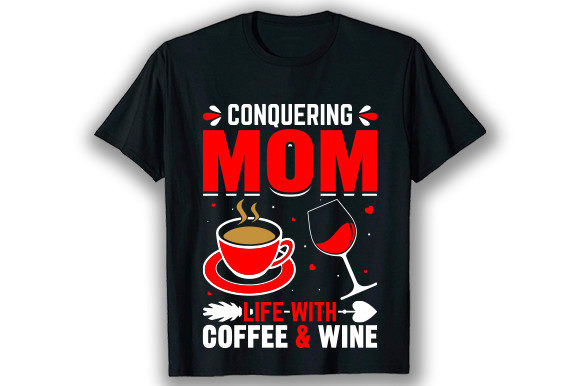
The initial impact of Mom Life. Coffee and Wine is warm, humorous, and instantly recognizable. The layout balances typography with illustrative elements in a way that feels organic rather than stiff. For an embroidery project, this balance is critical. Designs that are too text-heavy can become dense and bulletproof when stitched, while designs that are purely illustrative sometimes lack the narrative punch needed for a custom apparel piece. This artwork sits in a sweet spot. The visual personality suggests it belongs on items that are used daily and loved hard—think well-worn tote bags, favorite sweatshirts, or kitchen textiles that see regular rotation.
From a designer’s perspective, the 4500px by 5400px dimensions at 300 ppi provide ample resolution for digitizing. Whether you are working with the EPS Illustrator file or the transparent PNG, the edges appear clean enough to serve as a reliable template for creating a machine embroidery design. However, because this is categorized under Print Templates and Graphics, it is vital to remember that this is source artwork. It requires proper digitizing into a digital embroidery file before it can touch a needle. The high resolution ensures that when you or your digitizer trace the elements for satin stitch or fill stitch areas, there is no pixelation causing jagged edges in the final stitch file.
Real-World Application: The Canvas Tote Test
To truly evaluate this design, I mentally placed it on a natural canvas tote bag—a staple for any Etsy seller or handmade shop owner targeting mothers. Totes offer a stable, woven surface that is forgiving for embroidery, making them an ideal test case. In this scenario, Mom Life. Coffee and Wine performs exceptionally well as a center chest or front-panel placement.
For this specific application, I envision the text rendered in a sturdy satin stitch column to ensure legibility from a distance, while the coffee and wine graphics could utilize a combination of fill stitch for body and running stitch for detail. The humor of the design relies on the juxtaposition of the two beverages, so maintaining clear separation between these elements during digitizing is key. On a natural canvas, using a dark charcoal or deep burgundy thread would create necessary contrast without being harsh. This kind of thoughtful color selection elevates the item from a basic craft fair product to a boutique-quality accessory that customers trust and value.
If adapting this for sweatshirt embroidery, the strategy shifts slightly. Fleece and French terry fabrics have texture that can swallow fine details. Here, I would recommend simplifying the artwork slightly during the digitizing process. Increasing the spacing between letters and perhaps converting intricate lines into bolder shapes ensures the design remains readable after washing. The "Mom Life" theme resonates deeply on cozy apparel, making this a strong candidate for holiday embroidery collections or Mother’s Day specials.
Navigating Fabric Limitations and Hoop Sizes
While the artwork is versatile, not every substrate is a safe bet. I must advise caution when applying Mom Life. Coffee and Wine to stretchy knits, sheer fabrics, or highly textured materials like terry cloth without significant modification. The design likely contains varying stitch densities. Placing a dense logo-style graphic on a thin baby onesie or lightweight performance tee can cause puckering, fabric distortion, or even tearing. Always match the design complexity to the fabric stability.
Hoop size is another practical constraint. While the source art is large, you must confirm your specific hoop size capabilities before committing to a layout. If you are stitching on a cap or curved surface, the horizontal span of the design may need to be arched or resized to prevent flagging and registration errors. Detailed corners and tiny lettering often suffer on curved surfaces; in such cases, consider using only the central icon or a simplified version of the text. For small hoop sizes, verify that the smallest text elements remain above 4mm in height after resizing, otherwise, they will turn into illegible thread nests regardless of how crisp the original SVG looks.
Technical Notes for Professional Results
Success with this design depends heavily on preparation. Because you are receiving vector and raster graphics rather than pre-digitized stitches, you have total control over the outcome. Use this to your advantage. Before stitching on a customer’s garment or your final inventory piece, run a sew-out on scrap fabric that matches your target material. Check the stitch density; if the design feels too stiff, reduce the fill density or switch to a lighter stitch type. If the outlines are gapping away from the fills, adjust your pull compensation settings.
Stabilizer choice cannot be overstated. For the tote bag example, a medium-weight cutaway or heavy tear-away provides the necessary foundation. For apparel, always use a stabilizer appropriate for the knit structure to prevent tunneling. Thread colors should be tested against the actual fabric in natural lighting, as screen colors rarely match polyester or rayon thread perfectly. A black and white mockup test can also reveal whether the design holds up based on value contrast alone, which is crucial for ensuring readability across different garment colors.
Commercial Viability and Brand Consistency
For creative entrepreneurs and digital product sellers, Mom Life. Coffee and Wine offers significant commercial potential, provided licensing is respected. Always review the specific license terms included with your download to confirm whether you can sell finished physical products, digital embroidery files, or both. Assuming commercial use is permitted, this design serves as excellent anchor content for a spring or Mother’s Day collection.
When listing finished products on platforms like Etsy, use the provided high-resolution PNG to create professional printable mockups. Buyers engage more readily with listings that show the design clearly on a realistic product background. However, nothing builds buyer confidence like photos of the actual embroidered patch or finished garment. The clarity of the stitch-out reflects directly on your brand professionalism. If the design is too complex for your current machine or skill level, consider offering it as an applique design variation, which reduces stitch count and adds a premium textile element that justifies a higher price point.
Final Designer Verdict
Mom Life. Coffee and Wine is a charming, commercially relevant graphic that translates well to embroidery when treated with technical respect. Its strength lies in its emotional resonance and balanced composition, making it suitable for everything from custom apparel to personalized gifts. By paying attention to fabric compatibility, stabilizer selection, and appropriate digitizing techniques, makers can transform these print templates into high-value embroidered goods. Just remember: the quality of the final handmade product depends entirely on how thoughtfully you bridge the gap between digital art and physical thread. Test thoroughly, stitch confidently, and let the design’s personality shine through your craftsmanship.