I Am a Mom and a Dentist: Design Review
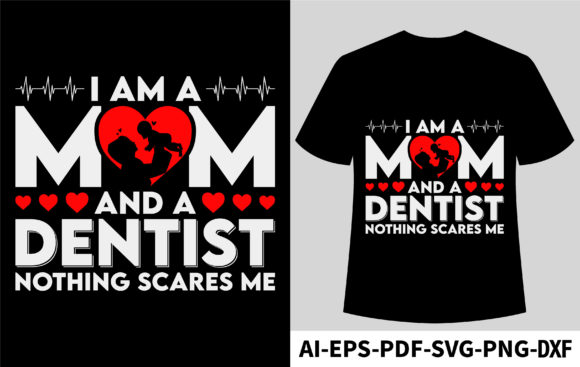
As an embroidery digitizer and product reviewer, I approach every new graphic with a specific question: will this actually stitch out cleanly on fabric? When evaluating I Am a Mom and a Dentist Nothing Scares, my first impression is that this artwork carries a distinct personality. It balances professional pride with maternal humor, creating a mood that is confident yet relatable. For those of us in the T-Shirt Designs and custom apparel space, finding graphics that bridge niche professions and family life is gold. However, having a clever phrase is only half the battle; the vector structure must support actual needle and thread.
This review breaks down how this design performs not just as a digital asset, but as a tangible embroidery project. Whether you are an Etsy seller looking for your next bestseller or a crafter making a personalized gift for a dentist friend, understanding the technical translation from screen to fabric is essential for a high-quality finished product.
Real-World Application: The Custom Sweatshirt Test
To truly judge the viability of I Am a Mom and a Dentist Nothing Scares, I mentally placed it in a real-life production scenario. Imagine preparing a custom embroidered sweatshirt for a dental hygienist who is also a new mother. This is a classic use case for this type of niche humor. The layout needs to sit comfortably across the chest or centered on the back without overwhelming the garment.
In this scenario, the design’s bold typography and iconography work in its favor. Sweatshirt fleece has a texture that can swallow fine details, so the strong shapes in this graphic are advantageous. As a sweatshirt embroidery candidate, it offers excellent readability from a distance. However, because the description notes "100 vector shapes resizable," I would advise checking the aspect ratio after resizing. If you stretch the design too wide to fit a larger hoop size, the lettering may distort. For a handmade product intended as a holiday gift or boutique merchandise, maintaining the original proportions ensures the text remains legible and the icons stay recognizable.
Vector Flexibility and Stitch Translation
The product includes AI, EPS, PDF, PNG, SVG, and DXF files. For machine embroidery designers, the vector formats (AI, EPS, SVG) are the most critical. Unlike raster images, these allow us to manipulate individual elements before digitizing. When converting I Am a Mom and a Dentist Nothing Scares into a machine embroidery design, I look for clean nodes and closed paths. The "easy change color" feature mentioned in the description is particularly useful here.
For example, if I am creating an applique design version to reduce stitch density on a lightweight tee, I need to separate the background shape from the text. The provided vector assets should allow me to isolate these layers easily. If you are planning commercial embroidery runs, this flexibility saves hours of redrawing. Always verify that the vectors are truly editable and not just flattened traces, as this impacts how smoothly your software can auto-digitize satin stitches versus fill stitches.
Fabric Considerations and Technical Limits
While the graphic is versatile, not all fabrics treat this design equally. Based on the visual weight typical of this style, here is where you should exercise caution:
- Stretchy Fabrics: On performance wear or thin jersey knits, dense lettering can cause puckering. Use a cut-away stabilizer and consider a water-soluble topping to prevent stitches from sinking into the weave.
- Textured Surfaces: For items like terry cloth towels or canvas tote bags, the design holds up well, but tiny decorative accents might get lost. Increase the underlay stitching to create a smooth foundation.
- Curved Items: If adapting this for caps or curved sleeves, the horizontal span matters. Ensure the design fits within your cap frame’s safe zone. You may need to arc the text slightly to match the curve of the hat.
- Dark vs. Light Fabric: Test thread color contrast before committing. White text on navy is classic, but if the design uses subtle shading or gradients (common in graphics), those details will vanish on dark fabric unless you use a white underlay base.
Remember, a beautiful digital file does not guarantee a perfect stitch-out. Always run a test sew on scrap fabric that matches your final project's weight and texture.
Commercial Value and Customer Perception
For small business owners and creative entrepreneurs, I Am a Mom and a Dentist Nothing Scares represents more than just a cute saying; it is a targeted marketing asset. Niche designs often convert better than generic ones because they speak directly to a specific identity. When a customer sees this on a printable mockup or a finished sample, they immediately recognize themselves in the product.
However, professionalism matters. A jagged stitch-out or poor registration ruins trust. Because this design targets professionals (dentists), the quality standard is inherently higher. Your stitching clarity reflects on their profession. Using proper stabilizer and high-quality thread colors is non-negotiable. If you are selling digital embroidery files derived from this art, ensure your digitized version respects the integrity of the original vectors while optimizing for machine movement. Jump stitches should be minimized, and trims should be logical to prevent thread nests on the back of the garment.
Practical Designer Notes for Success
Before you load this design into your machine or list it in your shop, run through this practical checklist. These steps have saved me countless hours and ruined blanks over the years:
- Verify Licensing: The description lists file types but does not explicitly state commercial usage terms for finished goods versus digital resale. Always confirm licensing before selling products or using the design in paid advertising.
- Check Hoop Compatibility: Measure the design dimensions against your largest available hoop. If resizing is necessary, do it in your embroidery software, not by stretching the vector blindly.
- Mockup Testing: Create both light and dark background mockups. This helps visualize how thread sheen will interact with different fabric colors. A matte rendering often looks different than shiny rayon thread.
- Detail Inspection: Zoom in to 400% on the vector file. Are there overlapping lines that could cause double-stitching? Clean these up before digitizing to avoid unnecessary needle penetrations.
- Washability Check: If this is for baby embroidery or kitchen linens, ensure the stitch type can withstand frequent laundering. Satin stitches wider than 7mm may snag; consider splitting them or using a textured fill instead.
Final Thoughts on Versatility
I Am a Mom and a Dentist Nothing Scares is a strong contender for anyone in the personalized gift or custom apparel market. Its blend of humor and identity makes it highly giftable, while the vector format provides the technical foundation needed for professional results. Whether you are stitching a patch for a lab coat, embroidering a tote bag for a conference, or creating a nursery pillow for a dentist mom-to-be, success lies in respecting the relationship between the digital art and the physical medium.
Treat this graphic as a starting point, not a finish line. Your expertise in stabilizer selection, thread tension, and fabric pairing is what transforms a collection of digital files into a cherished handmade product. By approaching this design with a critical, maker-focused eye, you ensure that the final result honors both the sentiment of the phrase and the quality of your craft.