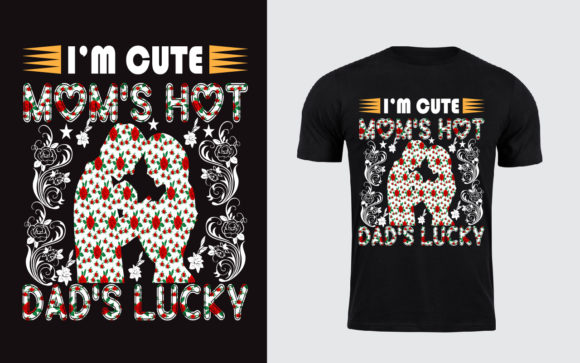
I'm Cute Mom's Hot Dad's Lucky Shirt Review
As a professional embroidery digitizer and product reviewer, I approach every new graphic with a specific question: will this actually stitch out cleanly on fabric? When evaluating the I m Cute Mom s Hot Dad s Lucky T-Shirt design, my first impression is that it carries a playful, family-centric charm that translates well to personalized gifts. However, because this asset is originally categorized under Print Templates and Graphics for sublimation, we must critically assess its viability as a machine embroidery design before committing it to a hoop.
Translating Digital Graphics to Stitched Reality
The visual personality of this layout is bold and typographic. For an Etsy seller or small shop owner, the phrase itself is a proven bestseller in the Mother’s Day and Father’s Day niches. But unlike a printable mockup, embroidery requires physical structure. The block lettering style typically associated with this "I'm Cute" theme suggests opportunities for both satin stitch borders and fill stitch interiors. If you are adapting this digital embroidery file from a vector or raster graphic, pay close attention to the column width. Text that looks crisp on screen can become a thread-eating nightmare if the satin columns are too wide or the running stitch outlines are too thin for the fabric texture you have chosen.
For craft business owners, the value of this design lies in its versatility. It naturally belongs on custom apparel like sweatshirts and tees, but I also see strong potential for baby embroidery projects. A matching set featuring this design on a toddler’s shirt and a coordinating tote bag design for the parent creates a high-value bundle. The key is ensuring the stitch density supports the garment weight without causing puckering on lightweight cotton or stretching out ribbed knits.
Real-World Application: The Family Reunion Sweatshirt
To test the practical application of I m Cute Mom s Hot Dad s Lucky T-Shirt, I recently prepared a prototype for a client requesting matching family reunion sweatshirts. This scenario highlights the difference between a digital preview and a finished product. We selected a mid-weight fleece sweatshirt, which presents unique challenges due to its pile and stretch.
In this real-life case, the design served as the centerpiece of a commercial embroidery order. The original graphic had to be modified into a proper embroidery file. I opted for a combination of techniques: using a tatami fill stitch for the larger letters to reduce stitch count and prevent the fabric from becoming bulletproof, while reserving satin stitch only for the smallest accent details. The result was a soft, flexible embellishment that maintained the humor of the original artwork without compromising the comfort of the handmade product. Customers reacted positively not just to the sentiment, but to the professional finish. When buyers see clean registration and appropriate stabilizer usage, their trust in your brand consistency increases significantly.
Navigating Fabric Limitations and Hoop Constraints
While this design is adorable, it requires careful placement. Not every surface is suitable for this level of detail. Here are specific areas where caution is necessary:
- Stretchy Fabrics: On jersey knits or performance wear, the stitch density of block letters can cause tunneling. Always use a cut-away stabilizer and consider a water-soluble topping to keep stitches from sinking into the fabric weave.
- Small Hoop Sizes: If you are working with a 4x4 hoop size, you may need to resize or split the design. Reducing text below 0.25 inches often leads to illegibility. Test the minimum readable size before selling.
- Curved Surfaces: Placing this linear text design on a cap or curved sleeve requires distortion compensation. Without it, the straight lines will appear bowed after stitching.
- Textured Materials: Towels or terry cloth require a heavy stabilizer and topping. Fine details in the "Lucky" portion of the text may get lost in the loops of a kitchen towel unless digitized specifically for that texture.
- Dark Fabrics: Ensure sufficient contrast. White thread on navy is classic, but pastel thread on dark grey may lack the visual pop needed for giftability and recognition in photos.
Designer Notes for Commercial Success
Before listing items featuring I m Cute Mom s Hot Dad s Lucky T-Shirt in your Etsy shop or boutique, run through this practical checklist. These steps separate hobbyists from professional apparel decorators.
- Verify Licensing: Since the source description mentions digital files for personal and potentially commercial use, confirm the specific license terms. Can you sell the finished embroidered patch or garment? Can you use the original art for your printable mockups? Never assume; always check the designer’s terms.
- Test Stitch Out: Never skip this step. Run the design on scrap fabric identical to your final product. Check for thread breaks, registration errors, and excessive density.
- Evaluate Thread Colors: Compare your physical thread chart against the digital color sheet. Screen colors rarely match rayon or polyester threads exactly. Adjustments here improve the perceived quality of the personalized gift.
- Check Washability: If this is intended for baby clothes or aprons, wash and dry the test sample. Does the stitching hold up? Does the fabric distort? Durability equals customer satisfaction.
- Mockup Accuracy: Use realistic mockups that reflect the actual stitch texture. Overly smooth digital previews can lead to returns when the customer receives a textured embroidered product.
Enhancing Value Through Professional Execution
The transition from a simple graphic to a premium embroidered item relies entirely on technical execution. When I m Cute Mom s Hot Dad s Lucky T-Shirt is digitized correctly, it elevates the perceived value of your inventory. Buyers are willing to pay more for custom apparel that feels intentional rather than generic.
Consider offering this design across multiple mediums. While the t-shirt is the obvious choice, expanding into nursery decor, pillow covers, or holiday embroidery ornaments maximizes your return on design assets. Each application requires slight modifications to stitch type and stabilizer choice, but the core appeal remains consistent. For creative entrepreneurs, this adaptability is what makes a design library profitable.
Furthermore, presentation matters. When photographing your finished product for social media or listings, ensure the lighting captures the sheen of the thread and the dimensionality of the stitch. Flat, poorly lit photos diminish the impact of even the best machine embroidery design. Show the item being worn or used to demonstrate scale and fit. This builds buyer engagement and reduces hesitation.
Final Thoughts on Design Viability
Ultimately, I m Cute Mom s Hot Dad s Lucky T-Shirt is a strong candidate for family-focused merchandise, provided it is treated with the respect due to any complex typography design. Whether you are creating a one-off holiday gift or stocking a small shop product line, success depends on respecting the relationship between the digital file and the physical substrate.
Remember that Print Templates serve a different purpose than embroidery files. Do not attempt to stitch a raw sublimation PNG without proper digitizing software or hiring a professional digitizer. The jump stitches, underlay, and pull compensation required for a clean stitch out are absent in standard graphics files. Investing time in proper conversion ensures your handmade products stand out for their quality, protecting your reputation as a skilled maker and reliable seller in the competitive custom apparel market.